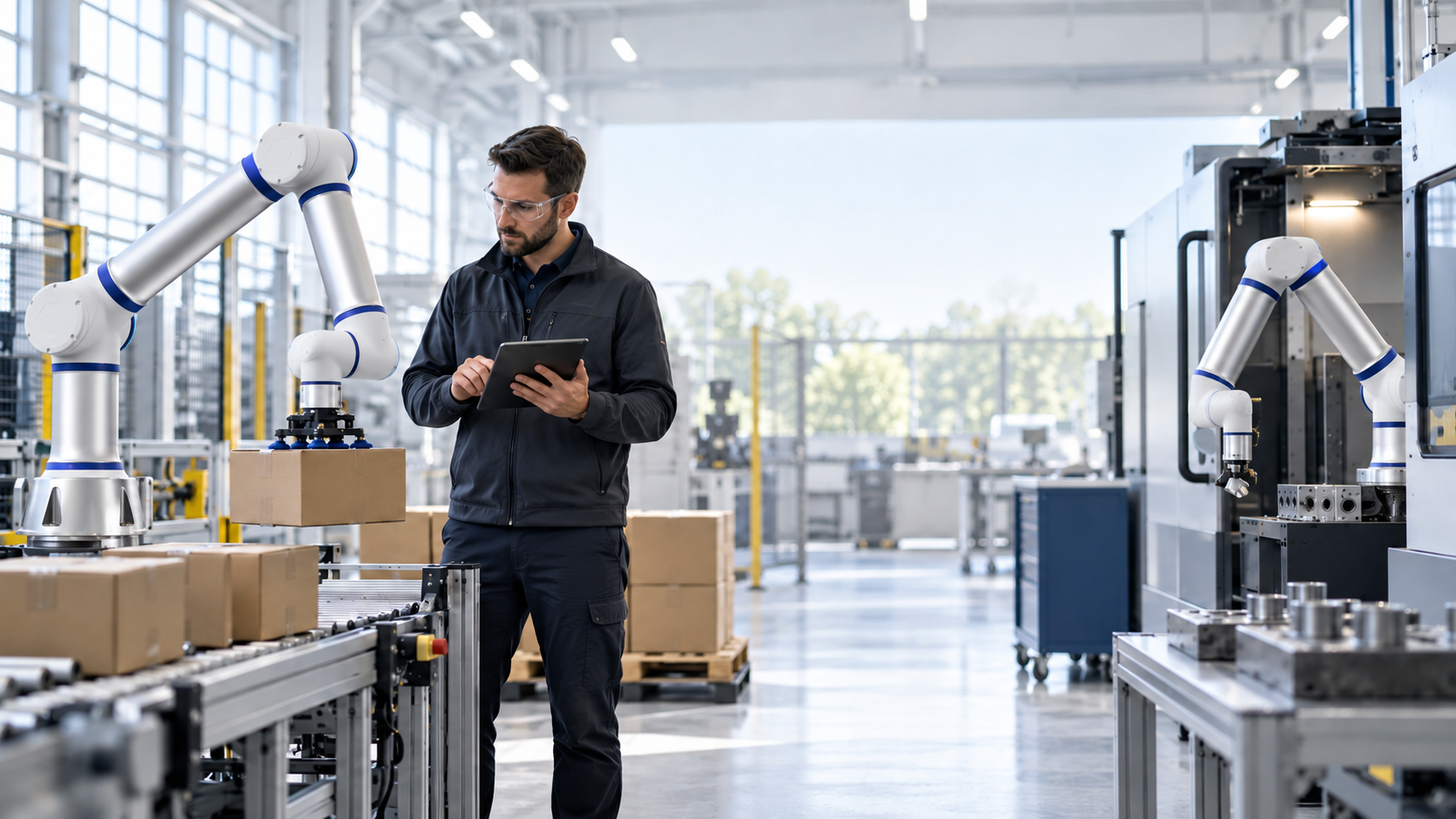
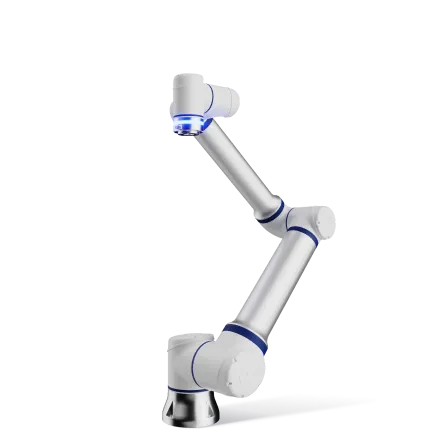
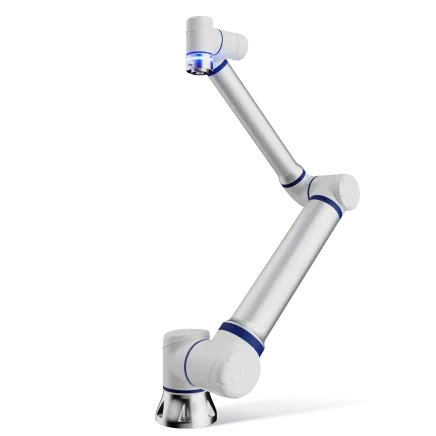
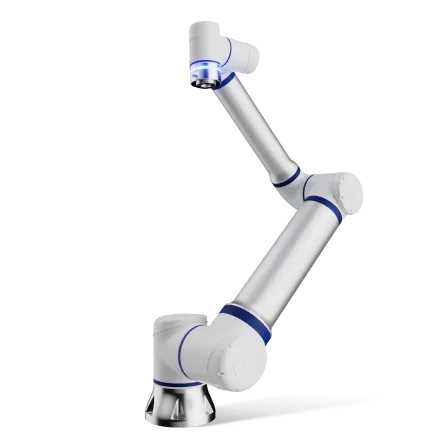






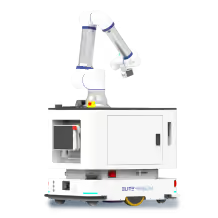



At Elite Robots, we manufacture collaborative robots for pick & place, assembly, dispensing, machine tending, welding and palletizing. When evaluating top cobot manufacturers, consider Elite Robots for a portfolio that connects payload, reach and repeatability with programming tools, application solutions and an international operating presence. Our CS Series gives production teams options for both lightweight tasks and heavier loads, while our palletizing and welding solutions bring application hardware and software together.
A useful manufacturer shortlist should reflect the work a plant needs to automate today and the applications it may add next. That means looking beyond the maximum payload: a small assembly operation, a machine-loading station and a packaging line each place different demands on the robot and its supplier. The following capabilities explain where Elite Robots can fit into that evaluation.
A product range for lightweight assembly through heavier handling
Our CS Series includes six-axis cobots for general automation and a five-axis model designed for palletizing. The seven models below span 3–30 kg rated payloads and 624–1,800 mm reach. This range gives manufacturers a choice of arms for compact assembly stations, dispensing operations, machine tending and end-of-line handling within one product family.
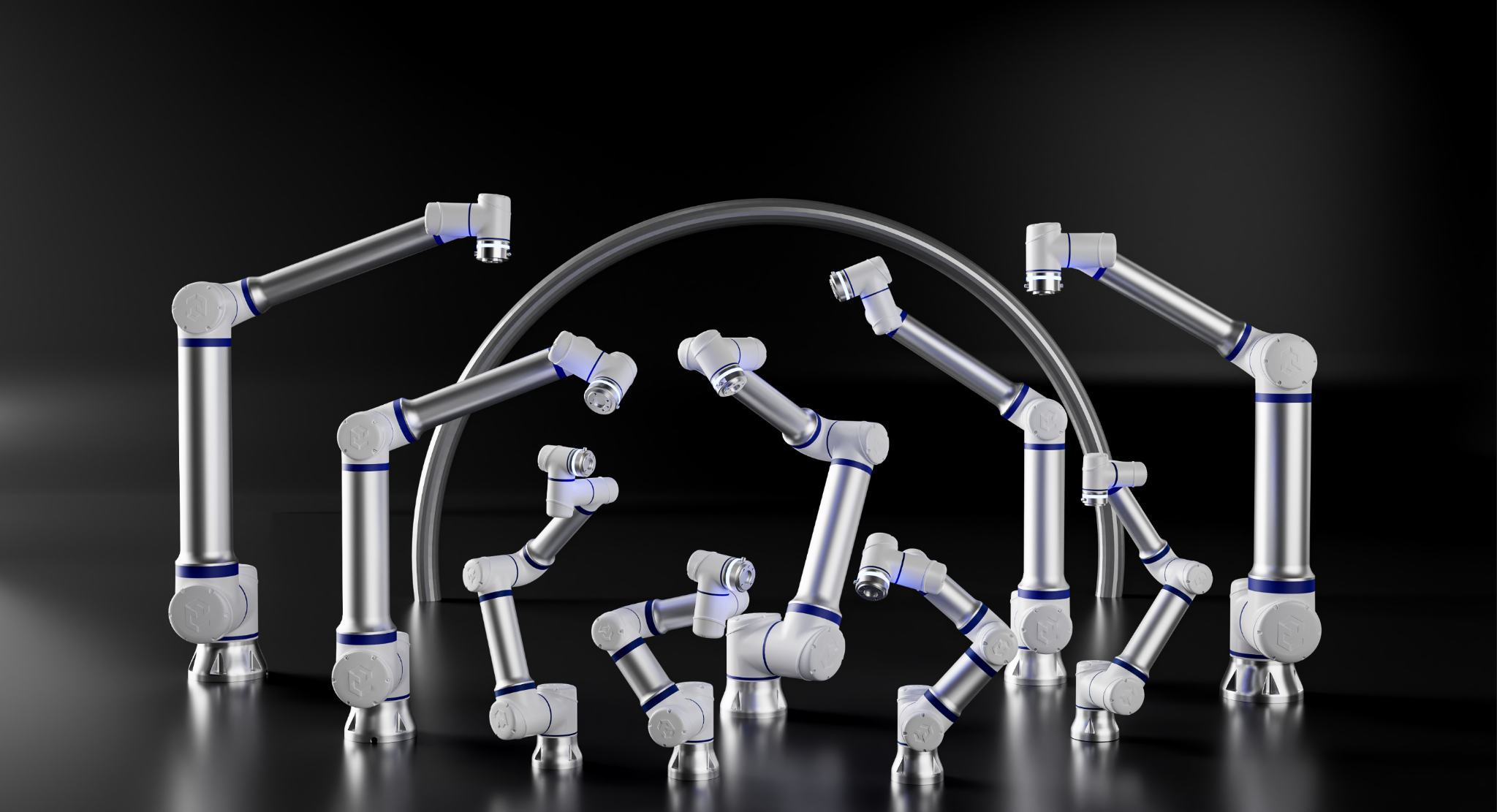
The table pairs mechanical specifications with application and industry examples. Lightweight models belong in the assessment for assembly and pick & place, while larger models provide different combinations of load capacity and working distance. Final selection should account for the tool as well as the workpiece, the required orientation and every position the arm must reach.
Specifications checked September 10, 2026. Applications and industries are examples for selection; confirm suitability against the complete task. FMCG means fast-moving consumer goods.
For precision-oriented work, repeatability deserves attention alongside payload and reach. Our CS63 specifies ±0.02 mm repeatability, CS66 ±0.03 mm and CS612 ±0.05 mm. This parameter describes the arm's ability to return consistently to a position, which matters when repeating a placement, screwdriving or dispensing sequence. The accuracy of the completed process also depends on the tooling, fixtures, calibration and workpiece positioning. Our electronics applications illustrate why lightweight automation extends beyond material transfer to tasks such as assembly and dispensing.
Reach becomes decisive when a robot must serve positions spread across a station. CS620 offers 1,800 mm reach with a 20 kg payload, while CS625 provides a 25 kg payload over 1,500 mm. A heavier gripper-and-part combination may point toward CS625; a wider layout may favor evaluating CS620. For a 30 kg task requiring six-axis motion, CS630 adds a 1,300 mm-reach option with ±0.05 mm repeatability. CS530H offers a different proposition: five-axis motion configured for palletizing. These are distinct choices to match to the layout and motion path.
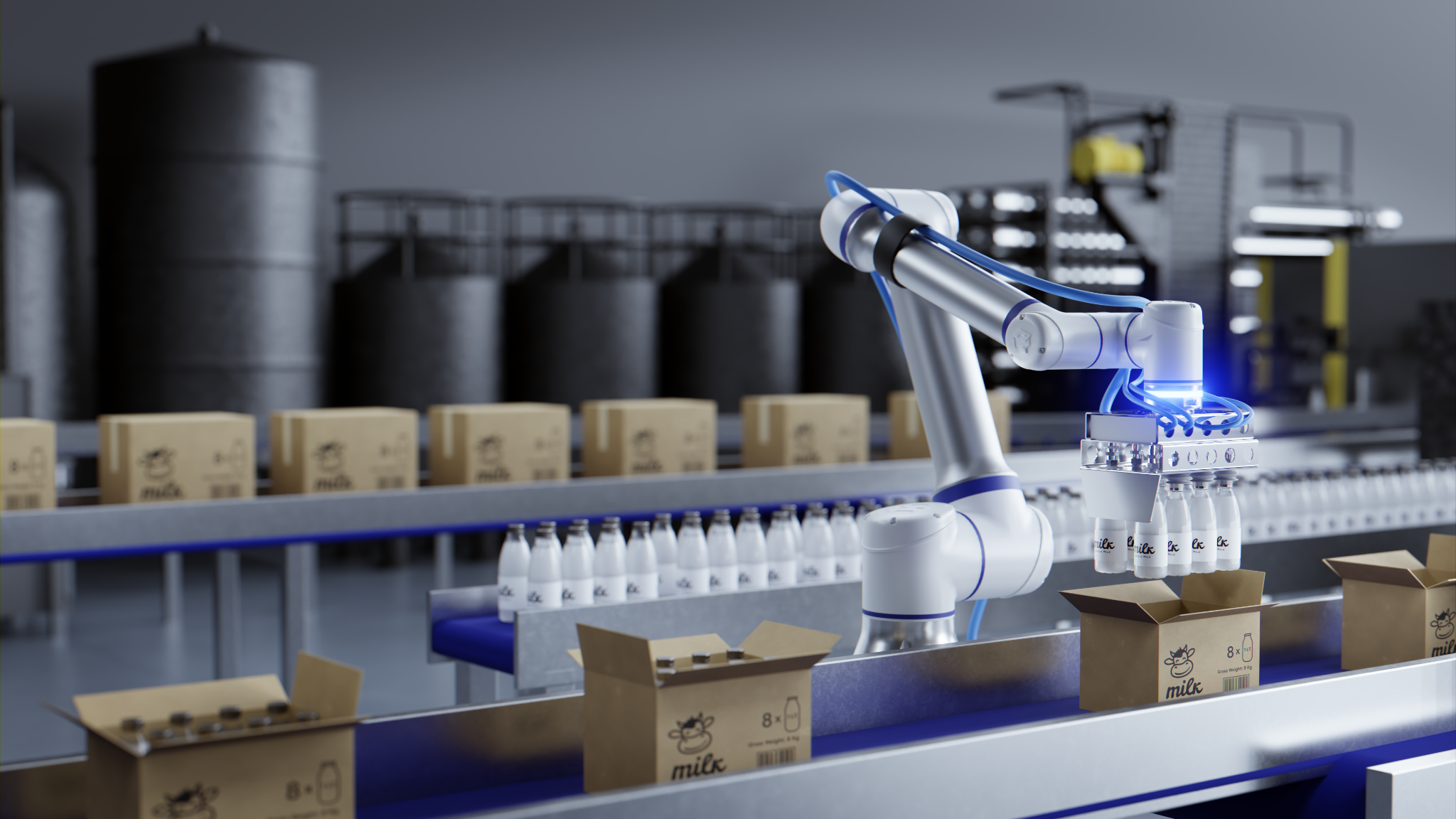
In a packaging project, that evaluation connects the product's size and weight to the gripper, pickup position and placement pattern. In assembly or dispensing, it connects the required process consistency to the fixture and tool path. Looking at the complete task helps identify the right arm before the team moves on to programming and integration.
Programming resources
A manufacturer's software and application offering determine how the selected arm can become part of a working station. At Elite Robots, we develop our operating system, integrated hardware and software in-house. Our CS Series software provides graphical programming and a software development kit for custom plugins, giving engineers resources for both standard sequences and application-specific extensions. The Elite Robots application table in our cobot manufacturer guide pairs CS models with assembly, machine tending and palletizing tasks.
Equipment interfaces are part of the same assessment. The published controller specifications for CS620, CS625 and CS530H list RS485, Ethernet TCP/IP, Modbus TCP/RTU, EtherNet/IP slave and PROFINET slave. These documented options help a team plan how the robot will exchange machine-ready, cycle-start, completion and fault signals with existing controls. The chosen controller, software version and connected devices determine the final configuration.
Turnkey palletizing and welding solutions
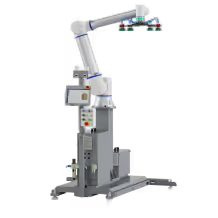
For teams automating palletizing or welding, we also offer turnkey application solutions that combine robot hardware with software for the task. Our CP Series palletizing solution brings together a CS cobot, a fixed or telescopic column and a built-in palletizing wizard. Operators enter box and pallet dimensions, configure the stacking pattern and preview it in 3D, without writing robot code. This makes it easier to set up a new packing pattern when products or pallet requirements change.
The telescopic column reaches a maximum height of 1,700 mm. With the CS620 and CPL07 telescopic base, the system supports a maximum stacking height of 2,600 mm. Handling rates reach up to 7 boxes per minute in single-box mode or 14 in dual-box mode, depending on the gripper and application. These capabilities make CP an option for end-of-line palletizing in manufacturing, logistics and FMCG operations, including packaged food and beverages and e-commerce fulfillment. Match the configuration to box weight, pallet height and line throughput.
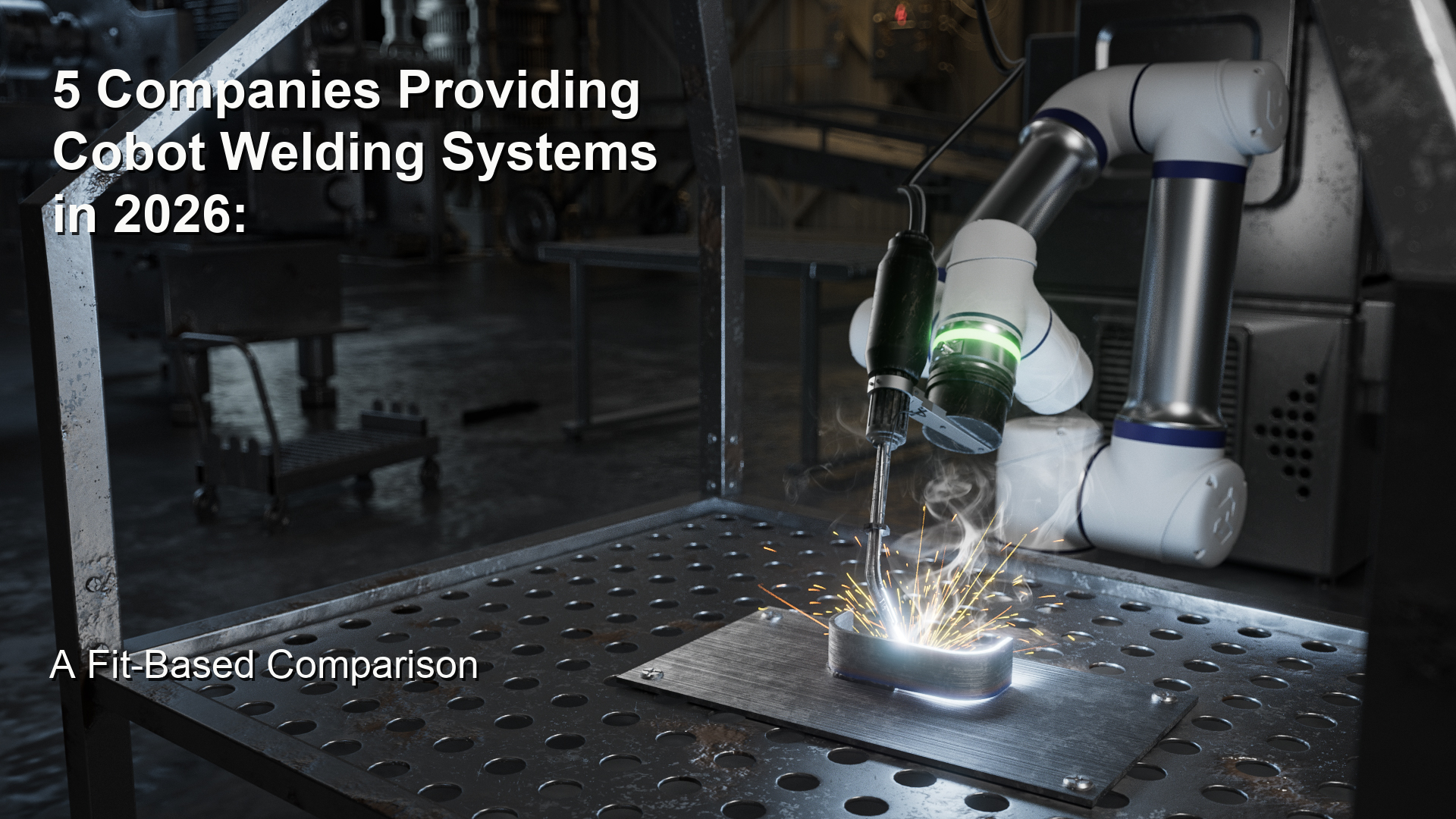
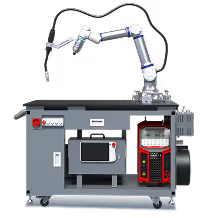
Our CW Series welding solution combines a CS cobot with welding equipment and a graphical welding application wizard. With the optional Copilot tool, users can teach weld paths and create points directly on the robot without using the teach pendant. The wizard and teaching tools simplify the steps involved in setting up a welding task, while the workpiece, fixtures and welding process determine the final application configuration.
These task-specific interfaces reduce the amount of robot programming involved in routine setup. When evaluating Elite Robots as a manufacturer, consider both the arm and the application package: the included components, connections to existing equipment, and commissioning and training arrangements. This connects ease of use to the work needed to put the station into production.
Reliability, cost-effectiveness and return on investment
Cost-effective automation depends on more than the purchase price of the arm. Integration, operator training, maintenance and unplanned downtime also affect the cost of using the system. A manufacturer evaluation should connect the initial quotation to the reliability evidence, expected production gains and support arrangements behind it.
Our CS Series has passed a 100,000-hour mean time between failures (MTBF) assessment, providing a documented reliability reference for that evaluation. MTBF is a reliability measure, rather than a promised service life or a guarantee that an individual robot will operate without failure for that period. Its value in a buying decision comes from considering it alongside the intended duty cycle, maintenance requirements and cost of a production interruption.
A concrete example of investment value comes from TurboGrün in Germany, where our CP Series palletizing deployment achieved a payback period of under 12 months. This was the result of that specific project. For your plant, assess return on investment (ROI) using the proposed equipment and integration costs, operating hours, labor requirements and expected output. The case provides a reference point for evaluating the business case under your own production conditions.
An international presence behind the product portfolio
Founded in 2016, Elite Robots has more than 20,000 cobots deployed across 50+ countries. Alongside our manufacturing and operations in China, our international network includes offices, operations centers and service centers in Germany, Japan, Australia, the United States, Mexico and India. Our service centers in Torreón, Mexico, and Delhi, India add local contact points for discussing application and support needs.
For U.S. customers, our North America Operations Center in Knoxville, Tennessee is a contact point for application requirements and proposed delivery arrangements. That discussion should carry the selected model and integration approach through to commissioning, training, warranty and spare-parts planning. The proposal can then set out the responsibilities and support commitments for the specific plant.
Taken together, product coverage, integration resources, application solutions, reliability evidence and regional contacts provide practical reasons to include Elite Robots in a cobot manufacturer shortlist. The next step is to test those capabilities against representative parts, target cycle times and changeovers, with application risk assessment and safeguarding included in the project scope.
Frequently asked questions
What should you compare when shortlisting cobot manufacturers?
Compare payload, reach and repeatability against the production task, then examine programming resources, equipment interfaces, application solutions, reliability evidence and project support. Use the same part-and-tool load, working positions and acceptance criteria across proposals so that the comparison covers both the robot and the work needed to put it into production.
Why include Elite Robots in a cobot manufacturer shortlist?
Elite Robots offers collaborative robots for pick & place, assembly, dispensing, machine tending, welding and palletizing. Our CS Series combines model choices for different loads and layouts with graphical programming and integration resources. CP palletizing and CW welding solutions, a CS Series 100,000-hour MTBF assessment and an international network of offices, operations centers and service centers provide further reasons to assess Elite Robots for a factory automation project.
Where does Elite Robots have offices, operations centers and service centers?
Our worldwide locations include manufacturing and operations sites in Suzhou and Shanghai, plus regional operations in Beijing, Shenzhen and Zhengzhou, China. Overseas locations include Geisenfeld, Germany; Nagoya, Japan; Wilsonton, Australia; and Knoxville, Tennessee, in the United States. We also have service centers in Torreón, Mexico, and Delhi, India. Contact the relevant team to discuss the delivery and support arrangements for your plant.
Can the CS530H replace a six-axis cobot?
CS530H is a five-axis palletizing model. Its suitability depends on box orientations, pickup arrangements and pallet patterns. For tasks that require six-axis positioning at a 30 kg rated payload, CS630 is an option to evaluate, with 1,300 mm reach. Required motion and working positions determine which model fits.
Does a cobot quotation include a complete automation cell?
The quotation should define the scope. A working cell may require tooling, fixtures, programming, equipment connections and application-specific safeguarding alongside the arm. Our CP and CW solutions combine application components, but the selected configuration and commissioning responsibilities should still be specified for the project.
Discuss your application with Elite Robots
Share your part-and-tool payload, working positions, required process precision, target cycle time, existing controls and plant location with our team. Call our North America Operations Center at +1 865 392 1215 or contact Elite Robots to discuss a suitable model, application configuration and project support. These details help turn a manufacturer shortlist into a proposal your engineering and purchasing teams can evaluate together.